
Monash Campuses: Locations, Transport & Best Suburbs Nearby
The campus listed on your Monash offer letter will have a direct bearing on where you should live. A student attending lectures at Clayton has different housing priorities from someone studying pharmacy at Parkville or nursing at Peninsula. The four main Victorian campuses sit in separate parts of Melbourne, so choosing accommodation before checking your campus can lead to an unnecessarily long commute.
So, where is Monash University located? Its largest campus is in Clayton, around 20 kilometres south-east of central Melbourne. The other three main Victorian campuses are in Caulfield, Parkville and Frankston. Monash also has an Alfred Health precinct, city locations and international campuses.
Here is a closer look at the Monash University campuses, their locations, public transport connections and nearby suburbs to consider when looking for student housing.
Table of Contents
Monash University Campuses: An Overview
Monash has four main campuses in Victoria:
Campus | Location | Main academic areas |
Clayton | Clayton, south-east Melbourne | Engineering, Medicine, Science, IT, Law, Arts and Education |
Caulfield | Caulfield, south-east Melbourne | Business, Economics, Art, Design and Architecture |
Parkville | Parkville, inner north Melbourne | Pharmacy and Pharmaceutical Sciences |
Peninsula | Frankston, south of Melbourne | Nursing, Allied Health, Paramedicine and Education |
The university also operates several specialist locations in Australia. These include:
- Alfred campus: Located within the Alfred Health precinct in Melbourne, this site focuses on health and medical research and education.
- 750 Collins Street: A Melbourne CBD location used for university activities and teaching.
- Law Chambers: Situated in Melbourne’s legal precinct, close to the city’s major courts.
Monash’s international presence includes its campus in Malaysia and its Indonesia campus. It also has an international study and research network that includes the Prato Centre in Italy, the IITB-Monash Research Academy in Mumbai and its partnership with Southeast University in Suzhou, China.
Students should distinguish between a full university campus and a specialist teaching or research location. Your course determines where you will attend classes, so check the campus listed against your particular program.
1. Clayton Campus – Monash University’s Main Campus
Location: Wellington Road, Clayton, VIC 3800
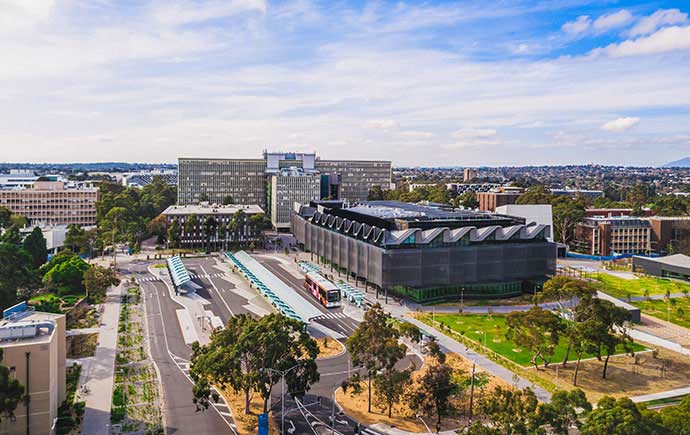
Clayton is the largest of all Monash campuses and the university’s principal site. It sits around 20 kilometres south-east of Melbourne’s CBD, with a large campus layout that includes teaching buildings, libraries, research facilities, student services and sports facilities.
Several major research and health facilities operate on or alongside the campus, including the Victorian Heart Hospital and research links with CSIRO. Monash Sport and the Robert Blackwood Hall are also part of the campus facilities.
Courses and academic areas
Clayton accommodates a substantial part of Monash’s teaching and research activity. Major study areas include:
- Engineering
- Medicine and biomedical sciences
- Information Technology
- Science
- Law
- Arts
- Education
- Business and Economics
Check the course page before arranging accommodation. Some degrees involve classes or placements at more than one location.
Getting to Clayton by public transport
Clayton does not have a train station directly outside its main campus entrance. Most students travelling by train use Huntingdale Station and connect to a bus.
Train and bus
- Take a Cranbourne or Pakenham line train to Huntingdale Station.
- From there, board the 601, 630 or 900 bus towards Monash University.
- Route 601 runs directly between Huntingdale Station and the Clayton campus.
- The 630 and 900 also serve the campus bus interchange.
The Cranbourne and Pakenham lines have operated through Melbourne’s Metro Tunnel since February 2026. Students travelling from central Melbourne should check the current train route and interchange arrangements rather than rely on older journey instructions.
Other bus routes
The Clayton campus bus interchange is served by several routes, including 601, 630, 631, 703, 733, 737 and 900. Routes 742 and 800 stop at other points around the campus.
Suburbs to consider near Clayton
The suburb you choose will affect how often you need to use a bus and how much time you spend travelling to lectures.
Clayton
Living in Clayton keeps you close to the university’s main entrance and the surrounding shopping streets. It is a practical starting point for students who expect to spend most of their week on campus. Rental properties include shared houses, apartments and student accommodation.
Notting Hill
Notting Hill sits close to the eastern side of the campus. Students living here can reach parts of Monash on foot or by a short bus journey, depending on the property and their destination. The suburb has a largely residential character, with housing options that include shared rentals.
Oakleigh
Oakleigh is further west and has a railway station, shopping streets and a well-established food scene. Students can travel towards Clayton by bus, although the exact journey depends on where they live. It is worth checking the route before signing a lease.
Huntingdale
Huntingdale is a useful option for students who expect to travel by train. The station provides a connection to the 601 bus, which runs directly to the Clayton campus. Living near the station can make the daily journey more straightforward.
Mulgrave
Mulgrave lies north of Clayton and has residential streets, shopping areas and bus connections. It may suit students who prefer a quieter suburb, but check the distance to the nearest bus stop and the frequency of services before choosing a property.
2. Caulfield Campus – Business, Art and Design
Location: 900 Dandenong Road, Caulfield East, VIC 3145
Caulfield is Monash’s second-largest campus, around nine kilometres south-east of central Melbourne. Its location beside Caulfield Railway Station makes it one of the more straightforward Monash campuses to reach by train.
The campus has a different character from Clayton. Its buildings sit within an established urban area, with shops, cafés and residential streets close by. Students can also reach central Melbourne without needing a separate bus connection for most train journeys.
Courses and academic areas
Caulfield is particularly associated with:
- Business and Economics
- Art, Design and Architecture
- Media and Communication
- Criminology
Students studying these subjects should check their course timetable for any classes scheduled at another Monash location.
Getting to Caulfield by public transport
Train
Caulfield Railway Station sits directly beside the campus. Frankston line services stop there, while Cranbourne and Pakenham line trains also serve the station following the Metro Tunnel network changes introduced in February 2026.
Tram
Route 3 stops at Caulfield Railway Station / Derby Road, close to the campus.
Bus
Routes 624 and 900 serve the Caulfield Railway Station / Sir John Monash Drive stop. The 900 also connects Caulfield with Clayton, making it useful for students who need to travel between the two campuses.
Suburbs to consider near Caulfield
Caulfield and Caulfield East
These suburbs put students close to the campus and railway station. Properties near the station can reduce the need for additional bus or tram journeys. Rental choices include apartments, units and shared houses.
Carnegie
Carnegie is a short distance south-east of Caulfield and has its own railway station, shops and restaurants. Students can travel to Caulfield by train or use local bus connections, depending on their address.
Malvern
Malvern has established residential streets, shopping areas and railway connections. It is worth considering if you want to live outside the immediate campus area while remaining within reach of Caulfield.
Balaclava
Balaclava is further south and has a railway station, local shops and tram connections. The journey to Caulfield will take longer than from the neighbouring suburbs, so check the route and travel time before committing to a rental.
3. Parkville Campus – Pharmacy and Pharmaceutical Sciences
Location: 381 Royal Parade, Parkville, VIC 3052
Parkville is Monash’s specialist campus for pharmacy and pharmaceutical sciences. It sits in Melbourne’s inner-north biomedical precinct, close to the University of Melbourne, major hospitals and medical research institutions.
The campus underwent a major redevelopment, adding research laboratories and teaching spaces. Its location is particularly relevant to students whose courses involve pharmaceutical research, laboratory work or links with the wider health sector.
Courses and academic areas
The main academic focus at Parkville is:
- Pharmacy
- Pharmaceutical Sciences
Students should confirm their teaching location with the university, particularly if their program includes practical work or activities at other sites.
Getting to Parkville by public transport
Tram
Route 19 runs along Royal Parade and stops at Stop 16, close to the campus. This is one of the most direct public transport options for students travelling from nearby northern suburbs or the city.
Train
Royal Park Station on the Upfield line is around a 10-minute walk from campus. Students can also travel to Parkville Station on the Metro Tunnel and connect to Route 19.
Bus
Route 505 stops near Princes Park and Royal Parade. The closest stop to your destination will depend on which campus building you need to reach.
Suburbs to consider near Parkville
Parkville
Living in Parkville puts students close to the campus and the surrounding medical and research precinct. The suburb has residential streets and access to nearby parks, although rental availability and prices should be checked against your budget.
Brunswick
Brunswick lies north of Parkville and has tram and train connections, along with shops and restaurants along Sydney Road. Route 19 provides a direct tram connection towards the campus.
Carlton
Carlton is close to both Parkville and central Melbourne. Students can reach campus by tram, bicycle or on foot from some parts of the suburb. Its proximity to universities and city facilities makes it a useful area to include in a housing search.
North Melbourne
North Melbourne is west of Parkville and has train, tram and bus connections. The journey to campus varies by address, but some parts of the suburb offer a relatively short commute.
4. Peninsula Campus – Nursing, Allied Health and Education
Location: 47-49 Moorooduc Highway, Frankston, VIC 3199
The Peninsula campus is around 40 kilometres south of Melbourne’s CBD, in Frankston. It is Monash’s third-largest campus and has strong links with health services and the surrounding community.
Its academic focus differs from Clayton and Caulfield. Students studying nursing, paramedicine, physiotherapy and other health-related subjects may spend time in practical classes, clinical settings and placements across the region.
Courses and academic areas
The campus is associated with:
- Nursing
- Paramedicine
- Physiotherapy
- Occupational Therapy
- Education
- Other allied health disciplines
Students should check placement arrangements separately. A clinical placement may take place away from the Peninsula campus, so living close to the university does not necessarily mean living close to every placement site.
Getting to Peninsula by public transport
Train and bus
The usual public transport route is to take a Frankston line train to Frankston Station and connect to a local bus.
Routes 775, 776, 782, 783 and 887 serve the campus area. The exact stop depends on the route and the part of campus you need to reach.
Leawarra Station
Leawarra Station on the Stony Point line is close to the campus. However, train frequency and service times differ from those on Melbourne’s main metropolitan lines. Check the timetable before relying on this station for a daily commute.
Intercampus shuttle
Monash also runs a free shuttle service between Clayton and Peninsula. The shuttle connects Peninsula with Clayton and Frankston Station, which can be useful for students travelling between university locations.
Suburbs to consider near Peninsula
Frankston
Frankston is the main residential and transport centre near the Peninsula campus. It has a railway station, shopping areas, medical services and bus connections to the university. Students can look at shared houses, apartments and other rental properties across the suburb.
Frankston South
Frankston South is a largely residential area south of the town centre. Some properties are close to the campus, but distances vary considerably across the suburb. Check the available bus routes or cycling distance from the specific address.
Seaford
Seaford lies north of Frankston and has its own railway station, along with access to the coastline and local shops. Students can travel towards Frankston by train before connecting to a campus bus.
Kananook
Kananook is another suburb along the Frankston railway line. Its station provides a rail connection to Frankston, where students can transfer to a bus for the campus. It is worth checking the complete journey rather than judging the commute by train distance alone.
Travelling Between Monash Campuses
Monash operates a free intercampus shuttle service for current students and staff. It connects Clayton with Caulfield and Peninsula, with an additional service between Peninsula and Frankston Station.
Students must scan a valid Monash M-Pass or student ID when boarding. The service is free, but seats are limited and are allocated on a first-come, first-served basis.
Shuttle routes and journey times
Route | Approximate journey time | Main purpose |
Clayton–Caulfield | 15–30 minutes | Travel between the two main south-eastern campuses |
Clayton–Peninsula | 30–50 minutes | Connect Clayton with the Frankston campus |
Peninsula–Frankston Station | 5–15 minutes | Link the campus with Frankston’s train services |
Journey times depend on traffic. The shuttle timetable also changes during the year, with services operating on weekdays during teaching periods and reduced schedules outside semesters.
The university does not run a direct intercampus shuttle to Parkville. Students travelling there should use Melbourne’s train and tram network.
Should you rely on the shuttle for daily travel?
The shuttle is useful when your timetable requires you to attend more than one campus. However, it is not a substitute for checking the public transport options near your accommodation. Services can be busy during peak periods, and the timetable may not match every class schedule.
Students should check the current departure times before planning a regular journey around the shuttle.
Monash Campuses: Location and Transport Comparison
Campus | Location | Main study areas | Public transport | Nearby suburbs |
Clayton | South-east Melbourne | Engineering, Medicine, IT, Science, Law and Arts | 601, 630 and 900 buses from Huntingdale; other campus bus routes | Clayton, Notting Hill, Oakleigh, Huntingdale |
Caulfield | South-east Melbourne | Business, Economics, Art, Design, Media and Criminology | Caulfield Station, Route 3 tram, buses 624 and 900 | Caulfield, Caulfield East, Carnegie, Malvern |
Parkville | Inner-north Melbourne | Pharmacy and Pharmaceutical Sciences | Route 19 tram, Royal Park Station, Route 505 bus | Parkville, Brunswick, Carlton, North Melbourne |
Peninsula | Frankston | Nursing, Paramedicine, Allied Health and Education | Frankston Station with connecting buses; Leawarra Station | Frankston, Frankston South, Seaford, Kananook |
Finding Student Accommodation Near Monash University
Your campus should be the starting point when searching for accommodation. A student studying at Clayton may benefit from living in Clayton, Notting Hill or Huntingdale, while someone attending Caulfield can look closer to the railway station or consider Carnegie and Malvern. Students at Parkville and Peninsula need to plan around their own transport networks.
Check the distance from each property to your campus, the nearest train or bus stop, and the time needed to reach your regular classes. If your course includes placements or teaching at more than one location, factor those journeys into your housing decision as well.
Compare student rooms, shared apartments and private rentals near your campus through Monash University Accommodation.
Frequently Asked Questions
How many campuses does Monash University have?
Monash has four main campuses in Victoria: Clayton, Caulfield, Parkville and Peninsula. It also has specialist Australian locations, including the Alfred campus, 750 Collins Street and Law Chambers. Its international locations include Malaysia and Indonesia, alongside research and academic partnerships in other countries.
Where is Monash University located?
Monash University is based in Melbourne, Victoria, Australia. Its largest campus is in Clayton, around 20 kilometres south-east of the CBD. The other main Victorian campuses are in Caulfield, Parkville and Frankston.
Which Monash campus is the main campus?
Clayton is Monash University’s main and largest campus. It houses a substantial part of the university’s teaching, research and student services, including major faculties, libraries, sports facilities and research centres.
Which Monash campus is closest to Melbourne CBD?
Parkville is the closest of the four main Victorian campuses to central Melbourne, at around three kilometres north of the CBD. Caulfield is approximately nine kilometres south-east of the city centre, while Clayton and Peninsula are further out.
What is the difference between Monash University and Monash College?
Monash University is the higher education institution that awards undergraduate and postgraduate degrees. Monash College is its pathway provider. It offers programs such as Foundation Year, diplomas and English language courses for students preparing to enter university study.
Some diploma programs provide a pathway into the second year of a related Monash University degree, subject to the relevant progression requirements.
Post a comment