
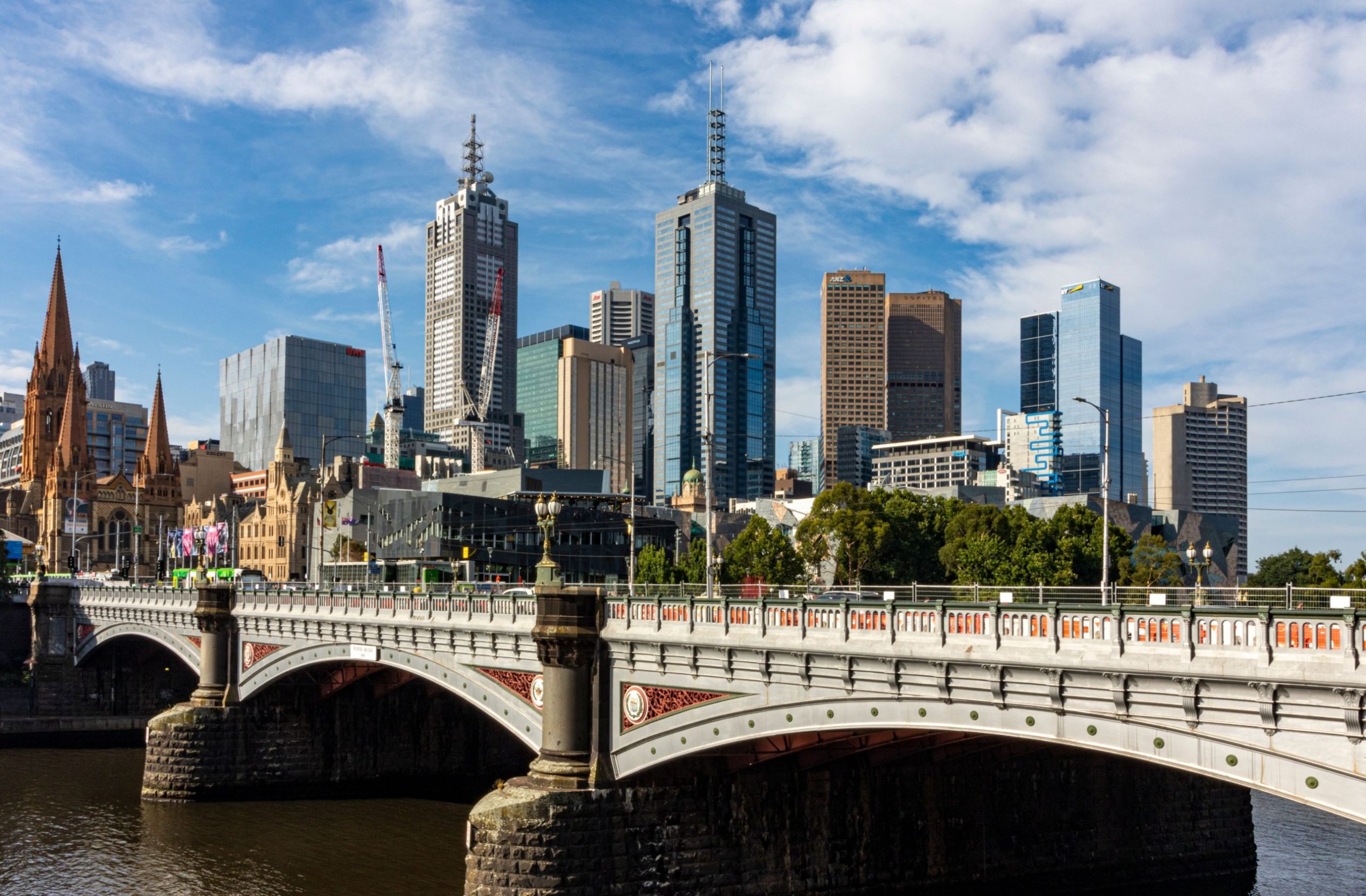
Top 10 Richest Suburbs in Melbourne (2026)
Melbourne’s most expensive residential markets are concentrated around a handful of established inner-eastern, bayside and inner-southern suburbs. Toorak, Brighton, Kooyong and East Melbourne have long attracted wealthy households, while places such as Canterbury, Kew and Malvern combine expensive housing with established school networks and large residential blocks.
The richest suburbs in Melbourne are expensive for different reasons. Some command high prices because of scarce land and historic homes. Others benefit from proximity to the CBD, private schools, parklands or the bay. Looking at median house prices alone does not tell the whole story, so the wider picture includes location, land values, housing stock and the concentration of high-income residents.
For students and young professionals, these suburbs are also useful points of comparison. Renting a room in an affluent suburb can put you close to major universities and transport networks, but the weekly rent can be considerably higher than in Melbourne’s more affordable student areas.
Table of Contents
What Are the 10 Richest Suburbs in Melbourne?
The following ranking places Melbourne’s most affluent suburbs according to the median house prices and residential characteristics outlined in the available data.
1. Toorak — Median House Price: AUD 5.2 Million
Toorak remains the clearest example of Melbourne’s prestige property market. Around five kilometres southeast of the CBD, the suburb is known for large homes, established gardens and streets lined with mature trees.
St Georges Road and Albany Road contain some of its most expensive residential properties, including substantial heritage houses and newer architectural residences. The suburb’s location also puts residents within easy reach of South Yarra, the Yarra River and central Melbourne.
Toorak’s combination of scarce land, established wealth and proximity to the CBD keeps it at the top of the rich suburbs Melbourne market.
2. East Melbourne — Median House Price: AUD 3.8 Million
East Melbourne occupies an unusually central position. The suburb borders Fitzroy Gardens and sits beside the Melbourne Cricket Ground, while the CBD is only a short distance away.
Its housing stock includes Victorian terraces, heritage properties and luxury apartments. The limited amount of residential land, combined with the location, makes East Melbourne one of the most expensive suburbs in Melbourne.
The suburb also benefits from proximity to Melbourne’s medical and educational precincts, which helps sustain demand among professionals.
3. Kooyong — Median House Price: AUD 3.6 Million
Kooyong is a small, tightly held suburb in Melbourne’s inner east. Large homes, leafy streets and limited housing turnover contribute to its high property values.
The Kooyong Lawn Tennis Club is one of the suburb’s most recognisable landmarks. Much of the area’s appeal comes from its quiet residential character despite being relatively close to central Melbourne.
Limited availability is particularly important here. When properties in tightly held suburbs come onto the market, buyers are competing for a relatively small amount of established housing stock.
4. Brighton — Median House Price: AUD 3.4 Million
Brighton is Melbourne’s best-known luxury bayside suburb. The coastline, large period homes and proximity to established private schools have helped make it one of the city’s most sought-after residential areas.
The colourful bathing boxes along Dendy Street Beach are perhaps its most recognisable feature, but the expensive property market extends well beyond the beachfront. Large Victorian and Edwardian houses occupy many of the quieter streets further inland.
Brighton’s location roughly 11 kilometres from the CBD gives residents access to the city while retaining a distinctly bayside setting.
5. Canterbury — Median House Price: AUD 3.3 Million
Canterbury is associated with large heritage homes, mature streetscapes and some of Melbourne’s most expensive residential addresses.
The Golden Mile, particularly around Monomeath Avenue, contains substantial Edwardian residences set on large blocks. The suburb is also close to several highly regarded private schools, which is a major consideration for affluent family households.
Land size plays an important role in Canterbury’s property values. Buyers are paying for established homes and the land beneath them, rather than simply for the building itself.
6. Middle Park — Median House Price: AUD 3.15 Million
Middle Park occupies a narrow stretch between Albert Park Lake and Port Phillip Bay. Its proximity to both the city and the coast makes it unusual among Melbourne’s expensive suburbs.
Much of the suburb’s character comes from Victorian terraces and double-fronted cottages. Heritage protections have helped preserve this housing stock, while the limited supply of residential land places further pressure on property prices.
For buyers who want to remain close to the CBD without giving up access to the bay and Albert Park, Middle Park offers a combination that is difficult to reproduce elsewhere.
7. Malvern — Median House Price: AUD 3.1 Million
Malvern sits in Melbourne’s inner southeast and has a long association with established family wealth.
Large homes, landscaped gardens and established streets dominate many parts of the suburb. Glenferrie Road provides a major shopping and dining strip, while the area’s proximity to private schools attracts families looking for long-term residential locations.
Malvern’s housing market also benefits from its position between the inner city and Melbourne’s more affluent southeastern suburbs.
8. Kew — Median House Price: AUD 2.95 Million
Kew lies around six kilometres east of the CBD along the Yarra River. The suburb contains a mixture of historic mansions, substantial family homes and newer luxury residences.
The Sackville Ward is particularly associated with high-value residential property. Kew also has access to established schools, parks and retail areas, making it popular with families rather than being purely an investment-driven market.
Its proximity to Hawthorn, Richmond and the CBD adds another layer to its appeal.
9. Armadale — Median House Price: AUD 2.85 Million
Armadale combines expensive residential streets with a strong retail presence around High Street.
The housing stock includes renovated Victorian villas, Edwardian homes and boutique apartment developments. The suburb’s location close to Toorak, Malvern and South Yarra places it firmly within Melbourne’s inner-southeastern luxury corridor.
High Street is a major part of the suburb’s identity, with fashion retailers, cafés, restaurants and other higher-end businesses serving the surrounding residential areas.
10. Balwyn — Median House Price: AUD 2.75 Million
Balwyn rounds out the list with a property market built around large residential blocks, established family homes and strong school demand.
The Balwyn High School catchment is a major factor for families, while the suburb’s eastern location gives residents access to parks, shopping and established transport routes.
Unlike some of the inner-city suburbs on this list, Balwyn has a more suburban feel. Its high property values are closely tied to land size, schools and the preference among affluent families for larger homes.
Melbourne’s Most Expensive Suburbs at a Glance
Rank | Suburb | Median House Price | Distance from CBD | Main Property Market Feature |
1 | Toorak | AUD 5.2 million | 5 km | Heritage mansions and established wealth |
2 | East Melbourne | AUD 3.8 million | 2 km | Historic housing and CBD proximity |
3 | Kooyong | AUD 3.6 million | 7 km | Limited housing stock and large homes |
4 | Brighton | AUD 3.4 million | 11 km | Bayside housing and private schools |
5 | Canterbury | AUD 3.3 million | 10 km | Heritage estates and large blocks |
6 | Middle Park | AUD 3.15 million | 4 km | Heritage housing and coastal location |
7 | Malvern | AUD 3.1 million | 8 km | Family estates and established amenities |
8 | Kew | AUD 2.95 million | 6 km | Large properties and school access |
9 | Armadale | AUD 2.85 million | 7 km | Luxury homes and High Street retail |
10 | Balwyn | AUD 2.75 million | 10 km | School catchment and large residential blocks |
The difference between the top and bottom of this table is substantial. Toorak’s median house price is almost twice that of Balwyn, yet both sit firmly within Melbourne’s high-value residential market.
Students are unlikely to buy property in these suburbs, but some may rent nearby. Students attending the University of Melbourne, Monash Caulfield or Swinburne can also look at Student Accommodation Melbourne and shared housing in surrounding suburbs where rents are lower.
Looking for accommodation near Melbourne’s wealthier suburbs? Compare student housing nearby and check how the weekly rent fits your budget.
Where Do Rich People Live in Melbourne?
Melbourne’s wealthiest households are concentrated across three broad areas: the inner southeast, the bayside suburbs and the inner-east school corridor.
Inner South-East
Toorak, South Yarra, Armadale, Malvern and Kooyong form one of the city’s strongest concentrations of high-value housing. The area attracts executives, business owners, professionals and families with established wealth.
Its proximity to the CBD is important, but so are the schools, shopping precincts, restaurants, parks and established housing stock.
Bayside Melbourne
Further south, Brighton, Black Rock and Beaumaris attract buyers looking for larger properties close to Port Phillip Bay.
Brighton has the highest property values of the three, while Black Rock and Beaumaris offer a somewhat quieter residential setting. Waterfront and near-water properties command substantial premiums, particularly where large blocks are involved.
Inner East School Belt
Kew, Hawthorn, Canterbury and Camberwell form another affluent residential corridor. Private schools are a major factor here, with institutions such as Xavier College, MLC, Trinity Grammar, Carey and PLC drawing families towards the area.
The result is a market where school access, land size and established family housing can matter as much as distance from the CBD.
For students, these suburbs can still be relevant because several major universities are nearby. Someone attending Swinburne, for example, may find Hawthorn more practical than its reputation as an affluent suburb might suggest, although accommodation costs need to be considered carefully.
Which Melbourne Suburbs Will Boom in 2026?
Growth prospects vary between suburbs, and infrastructure is one of the major factors shaping attention around particular parts of Melbourne.
East Melbourne and Albert Park benefit from scarce inner-ring land and established housing markets. Their proximity to the CBD makes them attractive to buyers looking for central locations where new residential supply is relatively limited.
Footscray and West Melbourne are undergoing substantial infrastructure and urban development. The Footscray Hospital precinct and major transport projects are changing parts of the western inner city, while older industrial areas continue to transition towards residential and mixed-use development.
Arden and North Melbourne are closely tied to the Metro Tunnel and the new Arden precinct. The area is expected to gain further importance as employment, research and innovation activity develops around the new station.
Further east, Box Hill and Ringwood are major activity centres benefiting from commercial investment and higher-density development. Their connection with the broader Suburban Rail Loop plans also keeps them on the radar of property buyers and investors.
Growth does not guarantee short-term price increases, though. Infrastructure can improve a suburb’s long-term prospects without producing immediate gains for every property.
What Are the Top 10 Best Suburbs in Melbourne?
The most expensive suburbs in Melbourne tend to dominate conversations about property, but price alone does not make a suburb a good place to live. Access to the CBD, public transport, schools, parks, restaurants and the general character of the neighbourhood all matter. A broader list of desirable Melbourne suburbs therefore looks quite different from a ranking based purely on house prices.
Rank | Suburb | What makes it attractive |
1 | East Melbourne | Heritage homes, parks and proximity to the CBD |
2 | South Yarra | Dining, shopping, transport and inner-city access |
3 | Hawthorn | Established homes, schools and access to the Yarra |
4 | Fitzroy | Cafes, restaurants, arts and inner-city character |
5 | Carlton | University access, restaurants and central location |
6 | Camberwell | Schools, larger homes and established residential streets |
7 | St Kilda West | Beach access, parks and proximity to the city |
8 | Kew | Family-oriented streets, schools and access to the eastern suburbs |
9 | Brunswick | Independent businesses, cafes and strong public transport |
10 | Eltham | Green spaces, larger properties and a quieter suburban setting |
East Melbourne stands out for students and professionals who want to remain close to central Melbourne without living directly in the CBD. South Yarra has a different character, with a much stronger concentration of restaurants, shops and nightlife.
Carlton remains particularly relevant for university students because of its proximity to the University of Melbourne and the central city. Brunswick and Fitzroy appeal to people who prefer a more independent, neighbourhood-based atmosphere, while suburbs such as Camberwell, Kew and Eltham offer more conventional residential settings.
What Are the Top Middle Class Suburbs in Melbourne?
Melbourne’s middle-income residential belt stretches well beyond the inner suburbs. Areas such as Ringwood, Mitcham, Bentleigh, Oakleigh, Greensborough, Eltham North, Essendon, Pascoe Vale, Point Cook and Werribee offer a different property market from Toorak or Brighton.
House prices in these areas can broadly sit around $850,000 to $1.4 million, depending on the suburb, property type and location within the suburb.
Ringwood and Mitcham
Ringwood and Mitcham offer established housing, shopping facilities and rail connections towards central Melbourne. Their position in Melbourne’s east also makes them relevant to households looking for more space without moving too far from metropolitan services.
Bentleigh and Oakleigh
Bentleigh and Oakleigh combine established residential streets with strong retail and transport infrastructure. Oakleigh is particularly well known for its food scene and multicultural character, while Bentleigh has a more conventional suburban feel.
Greensborough and Eltham North
These northern suburbs suit households that place greater value on larger homes and access to open space. Eltham North, in particular, has a greener suburban setting than many inner-city areas.
Essendon and Pascoe Vale
Essendon and Pascoe Vale sit closer to the inner north-west and offer relatively straightforward access to Melbourne’s central areas. Their established housing stock and transport links make them long-standing choices for families and professionals.
Point Cook and Werribee
Point Cook and Werribee sit further west and generally offer more house-and-land options than Melbourne’s inner suburbs. They are worth considering for buyers whose priority is getting more floor space within a lower price bracket.
What Is Australia’s Wealthiest Suburb?
The answer depends on how wealth is measured, but the source places Bellevue Hill and Point Piper in Sydney’s Eastern Suburbs at the top of Australia’s residential property market. Both have recorded median property values above $9–10 million in the figures used here.
These suburbs are characterised by waterfront or harbour-facing properties, large private residences and limited land availability. Their position near Sydney Harbour has also helped create a property market where exceptional homes can command prices far beyond the Australian metropolitan average.
Melbourne’s closest equivalents are generally found around Toorak, Brighton, Kooyong and the surrounding inner-eastern and bayside suburbs.
Where Do Billionaires Live in Australia?
Australia’s billionaire and ultra-high-net-worth population is concentrated heavily in Sydney and Melbourne.
Sydney’s Eastern Suburbs form the country’s most recognisable concentration of extreme property wealth. Point Piper, Bellevue Hill, Vaucluse and Mosman are associated with some of the country’s most expensive residential properties.
Melbourne’s equivalent concentration is found around Toorak and Brighton, with other wealthy households spread through Kooyong, South Yarra, Malvern, Kew and the bayside suburbs.
The distinction matters because a wealthy suburb does not necessarily mean every resident is a millionaire. Property prices are shaped by land scarcity, housing stock, school catchments, proximity to employment centres and long-term demand.
What Are the 10 Most Expensive Suburbs in Australia?
Melbourne accounts for several entries in the national luxury-property market, although Sydney’s harbour suburbs occupy much of the top end.
Rank | Suburb | Approx. median property value |
1 | Point Piper, NSW | $10 million+ |
2 | Bellevue Hill, NSW | $9.5 million |
3 | Vaucluse, NSW | $8.4 million |
4 | Tamarama, NSW | $5.8 million |
5 | Toorak, VIC | $5.2 million |
6 | Double Bay, NSW | $5 million |
7 | Mosman, NSW | $4.8 million |
8 | Rose Bay, NSW | $4.7 million |
9 | Bronte, NSW | $4.6 million |
10 | Woollahra, NSW | $4.3 million |
Toorak is the Melbourne name that appears most prominently in this national comparison. Its position reflects the concentration of large properties, established prestige streets and high-value redevelopment within a relatively small area.
Prefer to live closer to campus rather than pay a Toorak-level premium? Compare student accommodation in Melbourne’s well-connected suburbs.
For students, however, living in one of the most expensive suburbs in Melbourne is rarely necessary. Carlton, Brunswick, Southbank, Hawthorn and other well-connected areas can place students much closer to their campuses without carrying the same property premium.
What Is the Wealthiest Suburb?
There are two different ways to answer this question: wealth measured through taxable income and wealth measured through residential property values.
For taxable income, the source places Hawksburn/Toorak in Victoria’s 3142 postcode alongside Point Piper/Bellevue Hill in NSW’s 2027 postcode among Australia’s wealthiest areas. Average taxable incomes in these postcodes can exceed 250,000.
Property wealth produces a slightly different picture. Point Piper and Bellevue Hill sit at the top of the national residential market, while Toorak occupies the equivalent position among Melbourne’s suburbs.
That distinction is useful when discussing the richest suburbs in Melbourne. A suburb can have extremely expensive homes without every resident earning an exceptionally high salary, just as a high-income postcode may contain apartments and older properties alongside multimillion-dollar houses.
Choosing Between Melbourne’s Wealthiest and Best-Connected Suburbs
The richest suburbs in Melbourne are not automatically the most practical places for students. Toorak, Kooyong, Brighton and Canterbury command high property prices partly because of their land, housing stock, schools and established reputation. Those factors matter much less if the main requirement is getting to university quickly and keeping weekly housing costs under control.
Carlton and Parkville make more sense for students at the University of Melbourne. Hawthorn works particularly well around Swinburne University, while Clayton is a practical choice for students at Monash University. Students attending RMIT or other central institutions have a much wider selection of inner-city neighbourhoods.
That is where Student Accommodation Melbourne can become useful. Purpose-built student residences and private student properties can put students close to campuses and transport without requiring them to compete for the same housing stock as long-term family buyers.
Melbourne’s property market has a clear hierarchy, from harbour-style wealth around Toorak and Brighton to established middle-income suburbs further from the CBD. For students, the better choice is usually the suburb that fits the campus, commute, and weekly budget rather than the postcode with the highest property value.
Planning your move to Melbourne? Compare student accommodation near your university, check the weekly rent and commute, and shortlist the areas that give you a practical balance between location and cost.
Frequently Asked Questions
What is the richest suburb in Melbourne?
Toorak is widely regarded as Melbourne’s richest suburb, with an approximate median house price of AUD 5.2 million.
Which are the most expensive suburbs in Melbourne?
Toorak, East Melbourne, Kooyong, Brighton and Canterbury are among Melbourne’s most expensive suburbs, known for luxury homes and premium locations.
Where do wealthy people live in Melbourne?
Wealthy households are concentrated in Toorak, Brighton, South Yarra, Kooyong, Malvern, Kew and Canterbury, where prestigious homes and established amenities attract affluent residents.
Which Melbourne suburbs are best for students?
Carlton, Parkville, Hawthorn, Clayton and Brunswick are practical choices for students because of their university access, transport connections and accommodation options.
Is it expensive to live in Melbourne's richest suburbs?
Yes, suburbs such as Toorak and Brighton generally have higher housing costs. Students can consider shared housing or purpose-built student accommodation in more affordable, well-connected areas.
Post a comment