
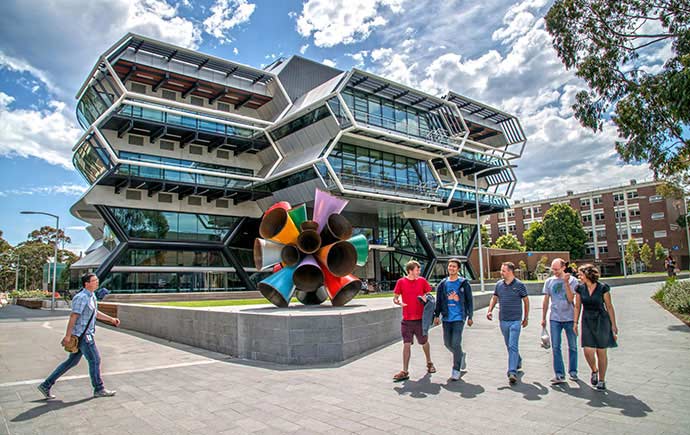
Monash University Reviews: Is Monash Good? What Students Really Say
Monash University has a strong reputation among Australian universities, but its name and rankings tell only part of the story. Students also have to deal with demanding coursework, large lectures in some first-year subjects and, depending on their campus, a fair amount of travelling. Those experiences can shape university life just as much as the quality of teaching.
The academic side is one of Monash’s strongest points. It belongs to Australia’s Group of Eight and has a substantial research presence across several disciplines. Its Pharmacy, Nursing, Education and Business programs also have recognition beyond Australia. Student experiences, however, differ across faculties and campuses. A course with strong industry links may still involve a heavy assessment schedule, while a student living far from Clayton may find the daily commute tiring.
So, is Monash University good? The answer depends partly on what you want from your degree and how well you can manage the demands that come with studying at a large university. This guide brings together what Monash University reviews tend to highlight: its academic reputation, campus facilities, student life and the concerns that come up when students discuss their experience.
Table of Contents
Monash University Rankings and Academic Reputation
Monash is a member of the Group of Eight, a coalition of Australia’s research-intensive universities. Its position in major international rankings reflects its research output, academic reputation and international standing.
The figures below give an indication of where Monash stands in the major ranking tables.
Ranking system | Monash University’s position |
QS World University Rankings | 31 |
U.S. News Best Global Universities | 38 |
Times Higher Education World University Rankings | 61 |
Monash also places among Australia’s leading universities across these ranking systems. Rankings use different methods, though, so the positions should not be treated as directly interchangeable. Some place greater weight on academic reputation, while others give more attention to research citations, international outlook or teaching-related measures.
For students, the more useful question is how a university’s reputation translates into the subject they intend to study. Monash has particularly strong standing in several fields.
Subject Rankings and Professional Recognition
Some of Monash’s subject-level results are especially notable:
Subject or area | Ranking or recognition |
Pharmacy and Pharmacology | 2nd in the QS subject ranking |
Nursing and Midwifery | 7th in ShanghaiRanking |
Education and Training | 6th in ShanghaiRanking |
Education | 18th in the Times Higher Education subject ranking |
Business | Triple Crown accreditation through AACSB, EQUIS and AMBA |
These results point to established academic strengths, particularly in health, education and business. They are useful indicators when comparing universities, although a subject ranking cannot tell you everything about a particular course. Course structure, teaching arrangements, placement opportunities and the experience of the faculty matter too.
Monash Business School’s Triple Crown accreditation is also worth noting. AACSB, EQUIS and AMBA are three major international accreditation bodies for business schools. Holding all three is a recognised mark of the school’s academic and institutional standing.
What Students Like About Monash University
Monash’s reputation is backed by several features that can make a difference to students during their degree. Its research facilities, student organisations and international study arrangements are among the points worth looking at.
Strong Research Facilities
Research is a major part of Monash’s academic identity. Students in research-oriented subjects may have access to specialist laboratories, technical equipment and facilities that support practical work alongside classroom teaching.
The Australian Synchrotron, located near the Clayton campus, is an important part of Melbourne’s research infrastructure. Monash researchers use the facility for work across areas such as materials science, medicine and engineering. Engineering students also have access to specialist facilities, including wind tunnel laboratories.
Law students have access to mock courtroom facilities, where they can practise legal proceedings in a setting that resembles a courtroom. Health-related programs use clinical simulation wards to give students practical experience in controlled environments before they move into clinical placements.
Access to these facilities depends on the course and the nature of the work involved. A student enrolled in a program with laboratory or clinical components is likely to have a different experience from someone whose degree relies mainly on lectures, seminars and independent study.
Student Clubs and Campus Activities
Monash has a large student community, and its campus organisations play a part in bringing students together outside their academic departments.
The Monash Student Association (MSA) represents students at the Clayton campus. MONSU operates at other campuses, including Caulfield. These organisations run student activities, events and support services, while clubs and societies give students a way to meet others with similar academic interests, hobbies or cultural backgrounds.
The number of organisations and activities can be useful for students who are moving to Melbourne and starting university without an established social circle. Participation is voluntary, of course. Students who have demanding timetables or long commutes may find it harder to attend regular events, so campus location and class schedules can affect how much they take part.
Opportunities to Study Overseas
Monash has an international presence that extends beyond its Melbourne campuses. The university operates campuses in Malaysia and Indonesia and has a study centre in Prato, Italy. It also maintains partnerships with more than 100 institutions around the world.
These arrangements give eligible students opportunities to study overseas or take part in international academic programs. The exact options depend on the degree, the partner institution and the subjects available during the exchange period.
Students considering an overseas semester should check how credits will transfer towards their Monash degree. Course sequencing can matter, particularly in programs with compulsory subjects that must be completed in a specific order.
What Students May Find Difficult at Monash
A university can have a strong academic reputation and still be a challenging place to study. Monash is a large institution, and some of the issues students encounter are connected to the scale of its courses and campuses.
Heavy Coursework and Assessment Schedules
Many Monash courses have demanding assessment schedules. Students may need to juggle assignments, laboratory work, group projects, presentations and tests in the same part of the semester. The pressure can be greater in courses with technical or professional requirements.
The workload varies by course and unit. A science student may be writing up lab reports while a law student prepares for tutorials and written work, and each will have a different weekly routine. Either way, students should expect to keep up with their units throughout the semester rather than relying on cramming before exams.
Students coming from education systems with less continuous assessment may need time to adjust. Tracking deadlines and starting larger tasks early makes the workload easier to manage.
Large First-Year Lectures
Popular first-year subjects can have sizeable lecture groups. This is common at a large university, particularly in introductory units taken by students from several degree programs.
Large classes can make it harder to ask questions during lectures or build a close relationship with teaching staff. Tutorials and smaller classes offer more scope for discussion, but the experience depends on the subject and the number of students enrolled.
Students who prefer smaller teaching groups should look at the class structure of their intended course. The number of students in a lecture does not necessarily reflect the size of its tutorials, laboratory sessions or other practical classes.
Travelling to the Clayton Campus
The Clayton campus is some distance from central Melbourne, and the journey can take time for students living in the city or suburbs without a direct public transport connection.
Huntingdale and Clayton are among the railway stations used by students travelling towards the campus, with bus connections completing the journey. Actual travel time depends on where a student lives, the time of day and the frequency of connecting services.
This is worth considering before signing a lease. A room that appears affordable may involve a lengthy daily journey, particularly if classes begin early or finish late. Students attending Clayton regularly should check the full route, including the bus connection, rather than judge the commute by the nearest train station alone.
Monash University: Which Campus Should You Choose?
Monash operates several campuses, each with a different academic focus. The campus a student attends will largely depend on their course.
Campus | Main areas of study |
Clayton | Science, engineering, medicine, business, arts and several other disciplines |
Caulfield | Art, design, business and related disciplines |
Parkville | Pharmacy and pharmaceutical sciences |
Peninsula | Nursing, physiotherapy, occupational therapy and other health-related fields |
Clayton is the university’s largest campus and has a broad mix of academic departments and student facilities. Caulfield has a different setting, with a stronger focus on art, design and business. Parkville is closely associated with pharmacy and pharmaceutical sciences, while Peninsula serves students in several health-related programs.
There is no single campus that suits every student. The right one is the campus where the required course is taught. Accommodation and transport plans should follow that decision, rather than the other way around.
Is Monash University Worth It?
Monash has an excellent academic reputation, well-developed research facilities and international standing in a number of disciplines. Student organisations and international study arrangements also give students options beyond their regular coursework.
The challenges are worth taking seriously. A heavy assessment load can be tiring, first-year lectures can be very large, and the trip to Clayton can take longer than students expect. None of this outweighs the university’s academic strengths, but it should be part of the decision.
For students whose chosen course matches Monash’s strengths and who are prepared for the workload, it can be a worthwhile place to study. The next step is to look closely at the campus, course structure and living arrangements. Students planning to attend Monash can check accommodation near their campus through House of Student’s Monash University accommodation listings.
Frequently Asked Questions
Is Monash University good?
Monash is one of Australia’s leading universities. Its Group of Eight membership, international rankings, research output and subject-level recognition all support its academic reputation, with strong programs in fields such as engineering, law and the health sciences.
That said, students should look beyond the overall ranking. The day-to-day experience depends on course workload, class sizes, campus location and access to teaching staff. Monash is a strong academic choice, but it may not suit someone who prefers a smaller university or a lighter assessment load.
Is Deakin or Monash better?
Both Monash University and Deakin University are established Australian institutions, but they have different academic profiles and campus arrangements. Monash has a stronger overall position in several international ranking systems and is a member of the Group of Eight. Deakin also has a substantial research and teaching presence, with campuses in Melbourne, Geelong and Warrnambool.
The better choice depends on the subject. Students should compare the specific course, professional accreditation, placement arrangements, tuition fees and campus location before deciding. A university’s overall ranking is only one part of that comparison.
Is Monash better than the University of Melbourne?
Monash and the University of Melbourne are both members of the Group of Eight and are among Australia’s best-known universities. Their academic strengths, course structures and campus experiences differ.
The University of Melbourne follows a distinctive undergraduate model in which students often complete a broader degree before moving into professional or specialist postgraduate study. Monash offers a different course structure, with several professional degrees available at undergraduate level. Students should compare the entry requirements and full study pathway for their chosen subject rather than rely on a general ranking comparison.
Which Monash campus is the best?
The best campus depends on the degree a student plans to study. Clayton is the largest campus and covers a broad selection of subjects. Caulfield is associated with art, design and business, Parkville focuses on pharmacy and pharmaceutical sciences, and Peninsula has several health-related programs.
Students should confirm their teaching location before arranging accommodation. Some courses may also involve placements or activities at locations beyond the main campus.
Post a comment