
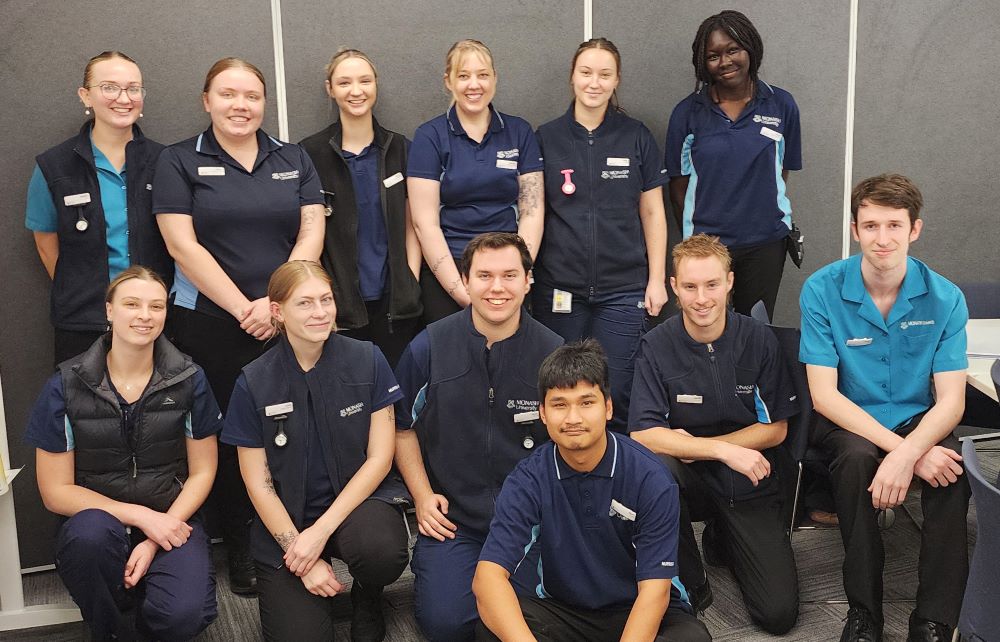
Monash Nursing 2027: Courses, Entry Requirements & Placements
Nursing is a challenging career that blends scientific knowledge with practical clinical judgement. Students coming into the field must learn to assess patients, connect with families and healthcare teams, react to changing clinical situations, and deliver safe care in various contexts.
Monash Nursing provides a range of study opportunities for students at all stages of their careers. Undergraduate programs educate students for entry to the register as nurses, while postgraduate training provides qualified clinicians with the chance to build expertise in specialised areas of practice.
This guide covers Monash Nursing for 2027: undergraduate and postgraduate courses, entry requirements, clinical placements, professional registration and the differences between each study pathway.
Table of Contents
Monash Nursing Courses: An Overview
Monash offers nursing programs at both undergraduate and postgraduate level. The right course depends on whether you are entering nursing for the first time, planning to qualify in both nursing and midwifery, or already working as a registered nurse.
Bachelor of Nursing (M2006)
The Bachelor of Nursing is Monash’s main undergraduate entry-to-practice nursing degree.
Course detail | Information |
Duration | 3 years full-time |
Part-time option | Up to 6 years, where available |
Primary study locations | Clayton and Peninsula campuses |
Main intake | Semester 1 |
Professional outcome | Pathway towards Registered Nurse registration |
The degree combines nursing theory, bioscience and clinical practice. Students build their knowledge progressively across the course, moving from foundational concepts to more complex clinical situations.
Areas of study can include:
- human anatomy and physiology
- nursing assessment and clinical reasoning
- pharmacology and medication safety
- acute and chronic health conditions
- mental health care
- aged care
- community and primary healthcare
- evidence-based practice
- professional and ethical responsibilities
The course also includes practical learning and supervised clinical experience, which form an essential part of preparing for professional nursing practice.
Bachelor of Nursing / Bachelor of Midwifery (Honours) (M3007)
Students interested in both general nursing and maternity care can consider the combined nursing and midwifery pathway.
Course detail | Information |
Duration | 4 years full-time |
Campus | Peninsula |
Qualification areas | Nursing and Midwifery |
Study format | Combined professional degree with honours |
This program covers two related but distinct professional areas.
Nursing focuses on caring for people across different stages of life and healthcare settings. Midwifery centres on pregnancy, childbirth, postnatal care and newborn health.
The combined degree requires a significant commitment to both academic study and clinical placement. Students may complete placement experiences across hospitals and maternity services while working towards the requirements of both professions.
For students who know they want to work specifically in maternal and newborn care, this pathway provides broader professional preparation than a standard nursing degree.
Postgraduate Nursing Study
Monash also offers postgraduate options for qualified nurses who want to develop further knowledge after entering professional practice.
The Master of Advanced Clinical Nursing (M6031) is intended for nurses seeking further education in particular areas of clinical care.
Specialisation areas may include:
- cancer care nursing
- neuroscience nursing
- emergency care
- palliative and end-of-life care
Postgraduate study is different from an undergraduate entry-to-practice nursing degree. Applicants generally need to meet professional and academic requirements before entering advanced clinical coursework.
Monash Nursing Entry Requirements for 2027
Entry into nursing depends on the program and the applicant’s education background.
Domestic Year 12 applicants are generally assessed through their ATAR or selection rank, along with subject prerequisites. Alternative entry pathways may apply to students who have completed previous tertiary or vocational study.
Bachelor of Nursing Selection Ranks
Recent entry benchmarks have varied between campuses and admission categories.
- Clayton: Recent selection levels have generally been around 76.00–77.00 or higher
- Peninsula: Recent selection levels have generally been around 70.00 or higher
- Nursing Scholars pathway: High-achieving applicants may face a minimum ATAR requirement of around 90.00+
These figures should be treated as entry benchmarks rather than guaranteed future cut-offs. Selection ranks can change from year to year depending on the number of applicants, available places and admission adjustments.
Subject Prerequisites
Applicants must also meet the required subject prerequisites.
For Year 12 students, this generally involves completing the required VCE Units 3 and 4 subjects, including English or EAL and any specified mathematics or science requirements.
Students applying with interstate or international qualifications need to meet the recognised equivalent requirements.
International Applicants
International students are assessed according to recognised academic qualifications and English language requirements.
Because nursing leads towards professional registration, English language requirements can be particularly important. Applicants should check the exact requirements attached to their chosen course and confirm whether their qualification meets the required academic equivalency.
What Do Nursing Students Learn at Monash?
The first stage of a nursing degree is not simply about memorising medical information.
Students need to understand why a patient’s condition may be changing, what information needs to be reported, how treatments are administered safely and when a situation requires escalation.
The academic side of the degree is therefore closely connected to clinical decision-making.
Bioscience and Human Health
Students study the scientific foundations needed to understand the human body and disease.
This can include anatomy, physiology and the biological processes involved in health and illness.
A strong grounding in bioscience helps nursing students understand what they are seeing in clinical settings rather than simply following procedures.
Clinical Assessment and Reasoning
Nurses need to recognise changes in a patient’s condition and respond appropriately.
Students learn how to gather clinical information, assess symptoms, identify potential concerns and communicate findings within a healthcare team.
Clinical reasoning becomes increasingly important as students move into more complex areas of care.
Medication and Patient Safety
Medication administration is a major professional responsibility.
Nursing education addresses medication safety, pharmacology and the processes involved in administering treatments correctly.
Patient safety also extends beyond medication. Students learn about infection prevention, risk management, documentation and professional responsibilities.
Mental Health and Community Care
Nursing careers are not limited to hospital wards.
Students may encounter mental health services, aged-care facilities, community organisations and primary healthcare settings during their education and clinical experience.
Understanding how care changes between these settings is an important part of preparing for professional practice.
Clinical Placements at Monash
Clinical placement is where students apply their classroom learning under professional supervision.
Before entering many placement settings, students develop practical skills in simulated environments. These sessions allow students to practise clinical procedures and decision-making before working with patients in real healthcare environments.
Simulation-Based Learning
Simulation sessions can recreate clinical situations that students may later encounter during placement.
Depending on the activity, students may practise:
- patient assessment
- communication with patients and healthcare professionals
- responding to clinical deterioration
- medication-related procedures
- emergency responses
- routine nursing skills
Simulation gives students a controlled environment in which to practise, receive feedback and learn from mistakes.
Supervised Clinical Placement
The nursing degree includes substantial periods of professional experience in healthcare settings.
Students complete at least 840 hours of clinical placement across the degree, meeting the practical training requirements associated with entry-level nursing education.
Placement settings may include:
- metropolitan hospitals
- regional health services
- community healthcare services
- aged-care facilities
- mental health settings
- specialist clinical services
The exact placement experience can differ between students. Placement allocation depends on the university’s available partner sites and the requirements of the course.
Students should also be prepared for placements that do not necessarily take place close to their usual campus or home.
What Are Clinical Placement Hours Like?
Clinical placements do not always follow a standard university timetable.
Depending on the setting, students may need to attend early-morning, daytime or other rostered shifts.
This is one reason accommodation and transport planning can matter for nursing students. A long daily commute may become particularly difficult when placement starts earlier than a normal lecture.
What Happens After You Graduate?
Completing an accredited entry-to-practice nursing degree is an important step towards working as a Registered Nurse.
Graduates who meet the relevant professional requirements can apply for registration through the appropriate Australian regulatory process.
Registered nurses can work across many areas of healthcare, including:
- acute hospital care
- emergency services
- mental health
- aged care
- community nursing
- rehabilitation
- primary healthcare
- specialised clinical services
Many graduates also continue their education later through postgraduate certificates, master’s degrees or specialist professional development.
The first nursing qualification does not limit someone to one type of workplace for their entire career.
Monash Nursing Career Pathways
A nursing degree can lead to different directions depending on your interests and further qualifications.
Hospital Nursing
Many graduates begin their careers in hospitals, working across medical, surgical and specialist units.
Graduate nurse programs can help newly registered nurses transition into professional practice.
Mental Health Nursing
Nurses can work in mental health services, although the roles and additional training required can vary.
This area may involve hospitals, community services and specialist mental health programs.
Aged Care and Community Health
Australia’s healthcare system also relies heavily on nurses outside major hospitals.
Community and aged-care roles can involve longer-term patient relationships and care delivered closer to where people live.
Advanced Clinical Practice
Experienced nurses may later undertake further education to move into specialised areas of practice.
Monash’s postgraduate nursing study can be relevant to registered nurses who want to develop knowledge in particular clinical fields.
Related Reading: Monash Fees and Accommodation
Nursing students planning their move should consider more than tuition fees. Clinical placements, transport, course equipment and accommodation can all affect the overall cost of studying in Melbourne.
You can also read our guide to Monash University fees to understand the costs international students may need to plan for.
Finding Accommodation Near Monash Nursing Campuses
Nursing students can have early classes, long practical sessions and placement commitments that do not always fit a typical university timetable.
Students based at Clayton may want to consider accommodation with straightforward access to the campus and surrounding transport connections. Those studying at the Peninsula Campus may need to factor the location of Frankston and their likely travel arrangements into their housing decision.
Finding accommodation before the semester starts can make the first few weeks easier, particularly for students moving to Melbourne for the first time.
Explore student accommodation options near Monash University:
Frequently Asked Questions
Is Monash University good for nursing?
Monash is widely recognised for its health and nursing education and combines university-based study with extensive clinical training.
Its nursing students also benefit from access to simulation-based learning and placement experiences across different healthcare settings.
How many years does Monash Nursing take?
The standard Bachelor of Nursing takes three years of full-time study.
The combined Bachelor of Nursing / Bachelor of Midwifery (Honours) takes four years of full-time study.
How many clinical placement hours are required?
Students complete at least 840 hours of clinical placement during the Bachelor of Nursing program.
These placements form a compulsory part of the professional preparation required for entry-level nursing education.
What ATAR do I need for Monash Nursing?
Recent selection benchmarks have generally been around the mid-to-high 70s for Clayton and around 70 or above for Peninsula, although entry requirements can change between admission years.
Students should check the current course information and admission data before applying for 2027.
Can international students study nursing at Monash?
Yes, eligible international students can apply, provided they meet the academic, English language and other entry requirements for the course.
International applicants should also consider the additional costs associated with studying and completing clinical placements in Australia.
How much does Monash Nursing cost?
Eligible domestic students may study in a Commonwealth Supported Place (CSP), where the Australian Government subsidises part of the cost and eligible students may defer their student contribution through HELP.
International tuition fees are different and can change between years. Applicants should check Monash’s current fee information for their intended intake.
Post a comment