
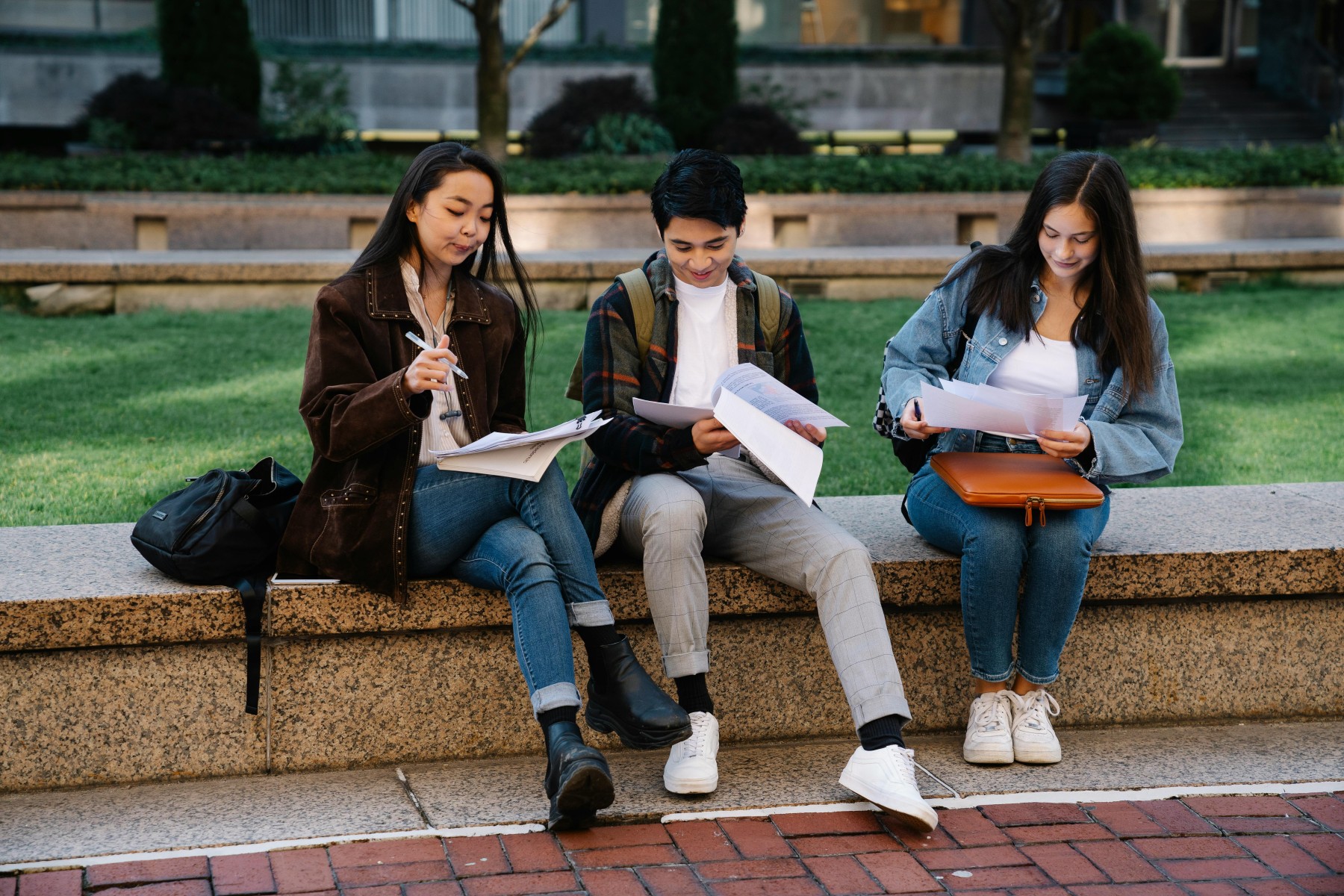
Australian Student Visa (Subclass 500): The Complete Guide for International Students
Everything you need to know — from eligibility to arrival
Australia is one of the world’s most sought-after study destinations — and for good reason. World-class universities, a multicultural society, stunning landscapes, and post-study work opportunities make it a top choice for students globally. But before you can set foot in a Sydney lecture hall or a Melbourne student flat, you need the Australian student visa — officially known as the Student Visa (Subclass 500). This comprehensive guide covers absolutely everything: who qualifies, what documents you need, how much it costs, how long it takes, your rights while studying, and how to set yourself up for success once you arrive.
Quick Fact: Australia is the third most popular destination for international students globally, hosting over 750,000 international students every year.
Table of Contents
What Is the Australian Student Visa (Subclass 500)?
The Student Visa Subclass, 500 is the primary visa for international students who wish to study full-time, in Australia. It replaced the former student visa subclasses (570–576) in 2016 and consolidated all study-related visas into a single, streamlined category.
This visa allows you to study at an Australian institution that is registered on the Commonwealth Register of Institutions and Courses for Overseas Students (CRICOS). Whether you’re pursuing a short English language course, a bachelor’s degree, a master’s, or a PhD — Subclass 500 is the visa you need.
Visa Detail | Information |
Visa Name | Student Visa (Subclass 500) |
Purpose | Full-time study at a CRICOS-registered institution |
Duration | Duration of your course + extra time |
Renewable? | Yes — can be extended if you continue studying |
Work Rights | Up to 48 hours per fortnight during study |
Family Members | Can accompany you on the same visa |
Who Is Eligible for the Australian Student Visa?
To be eligible for the Subclass 500 visa, you must satisfy several requirements set by the Australian Department of Home Affairs. Here is a complete breakdown of all eligibility criteria:
Genuine Temporary Entrant (GTE) Requirement:
This is the most important eligibility requirement. You must demonstrate that your intention to study in Australia is genuine and temporary — meaning you intend to return to your home country after your studies. The Department assesses this by looking at:
- Your circumstances in your home country (family ties, employment prospects, assets)
- Your potential migration motivation (immigration history, visa refusals)
- Your value of the education to your future career
- Your immigration history and compliance record
Important: A weak GTE statement is one of the top reasons for student visa refusal. You must write a compelling, honest, and specific personal statement.
Enrolment in a CRICOS-Registered Course
You must have a valid Confirmation of Enrolment (CoE) from a CRICOS-registered institution. This covers universities, TAFEs, private colleges, English language schools, and schools. The course must be full-time.
English Language Proficiency
Most applicants are required to demonstrate English proficiency. Accepted tests and minimum scores are:
English Test | Minimum Score Required |
IELTS Academic | Overall 5.5 – 6.5+ (varies by institution) |
TOEFL iBT | 46–79+ (varies by institution) |
PTE Academic | 42–58+ (varies by institution) |
Cambridge C1 Advanced | 169+ (varies by institution) |
OET | B or above (for health-related courses) |
Note: Some nationalities and courses may be exempt from English language tests. Check with your specific institution and the Department of Home Affairs.
Financial Capacity
You must demonstrate you can support yourself financially throughout your stay in Australia. The Department expects you to show funds covering:
- Tuition fees for your first year of study
- Living costs: AUD 24,505 per year (2026 figure) for yourself
- AUD 8,574 per year for a partner/spouse accompanying you
- AUD 3,670 per year for each child accompanying you
- Return airfare costs
Student Tip: Acceptable evidence includes bank statements (last 3–6 months), scholarship letters, loan documents, or a letter from a sponsor confirming financial support.
Health Insurance (OSHC)
All international students in Australia must hold Overseas Student Health Cover (OSHC) for the entire duration of their visa. This is mandatory — not optional. Most institutions either arrange this on your behalf or require you to purchase it before the CoE is issued.
OSHC typically covers doctor visits, hospital stays, ambulance services, and limited pharmaceuticals. Cost varies by provider and coverage level but averages AUD 500–700 per year for a single student.
Health and Character Requirements
You must meet Australia’s health and character standards:
- Health: You may be required to undergo a medical examination by a panel physician approved by the Australian Government. Certain conditions may affect your visa outcome.
- Character: You must not have a substantial criminal record. Police clearance certificates from your home country and any country you’ve lived in for 12+ months may be required.
Documents Required for the Australian Student Visa
Document requirements can vary based on your nationality, course, and institution. Below is the comprehensive checklist of documents you will typically need:
Mandatory Documents
- Valid passport (must be valid for the entire duration of your visa)
- Confirmation of Enrolment (CoE) from your CRICOS-registered institution
- Genuine Temporary Entrant (GTE) statement (written personal statement)
- Proof of English proficiency (IELTS, TOEFL, PTE, or equivalent)
- Financial evidence (bank statements, scholarship letters, sponsorship letters)
- OSHC (Overseas Student Health Cover) policy or purchase confirmation
- Passport-size photographs (as per specifications)
- Completed visa application form (lodged online via ImmiAccount)
Commonly Required Additional Documents
- Academic transcripts and certificates (previous qualifications)
- Letter of offer from your Australian institution
- Health examination results (if requested by the Department)
- Police clearance certificates
- Birth certificate
- Marriage certificate (if applicable)
- Proof of relationship (if bringing dependants)
- Evidence of ties to home country (property, employment, family)
Pro Tip: Organise all documents in a clear, labelled digital folder before starting your online application. Missing or unclear documents are the #1 cause of delays.
How to Apply: Step-by-Step Application Process
The Australian student visa application is submitted entirely online through the Australian Government’s ImmiAccount portal.
Here is a step-by-step walkthrough:
- Create an ImmiAccount: Go to immi.homeaffairs.gov.au and register for an ImmiAccount if you don’t already have one.
- Receive your CoE: Accept your offer from your Australian institution and receive your Confirmation of Enrolment number.
- Purchase OSHC: Arrange Overseas Student Health Cover before or during the application process.
- Complete your GTE statement: Write a thorough, honest statement explaining why you want to study in Australia and your plans to return home.
- Gather all documents: Compile all required documents in digital format (PDF preferred, high resolution).
- Submit your application online: Log into ImmiAccount, select ‘Student Visa Subclass 500’, fill in the form, upload documents, and pay the visa application fee.
- Biometrics (if required): Some nationalities may be asked to provide biometric data at a Visa Application Centre (VAC).
- Health examination: If required, book an appointment with a panel physician through the eHealth portal.
- Wait for a decision: Processing times vary — check your ImmiAccount for updates and ensure your contact details are up to date.
- Receive your visa grant: Your visa will be electronically linked to your passport. You’ll receive a visa grant notice — save it!
Apply Here: All applications must be submitted at: immi.homeaffairs.gov.au/visas/getting-a-visa/visa-listing/student-500
Australian Student Visa Cost (2024–2025)
The Australian student visa application fee is set by the Department of Home Affairs and is subject to change annually. Here is a full breakdown of costs:
Fee Type | Amount (AUD) |
Primary Applicant Visa Fee | AUD 710 |
Additional Applicant (18 or over) | AUD 710 |
Additional Applicant (under 18) | AUD 175 |
OSHC (approx., per year) | AUD 500 – 700 |
Health Examination (if required) | AUD 300 – 500+ |
Biometrics (if required) | AUD 55 |
Police Clearance (varies by country) | AUD 40 – 150 |
Budget Reminder: Always budget beyond just the visa fee. Total upfront costs including OSHC, health checks, and document preparation can reach AUD 1,500–2,000 before you even board the plane.
Processing Time: How Long Does It Take?
Processing times for the Australian student visa vary significantly depending on your nationality, the completeness of your application, and current Department of Home Affairs workloads. Here’s what to expect:
Processing Category | Estimated Time |
75% of applications processed within | 19 days |
90% of applications processed within | 40 days |
Specific country or complex cases | Up to 3–6 months |
- Apply at least 3–4 months before your course start date to be safe
- Avoid applying too early — applications are generally not assessed more than 12 months before the course start date
- Track your application status in ImmiAccount regularly
- Respond promptly to any requests for additional information from the Department
When to Apply: The sweet spot is 3–6 months before your intended travel date. Peak processing times occur between November and February — apply early if your start date falls in this window.
Work Rights on an Australian Student Visa
One of the biggest advantages of the Australian student visa is the right to work while studying. Here’s everything you need to know:
During Your Studies
- You can work up to 48 hours per fortnight (two-week period) while your course is in session
- There is NO limit on hours you can work during scheduled course breaks and holidays
- Your partner/spouse on a secondary visa may also be eligible to work, depending on your study level
Types of Work Allowed
- Casual or part-time employment in any sector
- Internships and work placements that are part of your course curriculum (these may not count toward your 48-hour limit)
- Volunteer work
Sectors Popular with International Students
- Hospitality and food service (cafes, restaurants, bars)
- Retail and customer service
- Healthcare support roles (for relevant study streams)
- Tutoring and education support
- IT and tech support roles (for engineering/IT students)
Student Accommodation Tip: Living close to your university or in student accommodation in Sydney, Melbourne, or Brisbane can reduce commute time — giving you more hours available for both study and work.
Conditions and Obligations of the Student Visa
Holding a Student Visa Subclass 500 comes with specific conditions you must comply with at all times. Breaching these can result in visa cancellation:
Condition | What It Means |
Condition 8105 | Cannot work more than 48 hrs per fortnight during study |
Condition 8202 | Must maintain enrolment in a full-time registered course |
Condition 8516 | Must maintain adequate health cover (OSHC) for the visa duration |
Condition 8533 | Must notify your education provider of your home address in Australia |
Condition 8534 | Must achieve satisfactory course progress as assessed by provider |
Warning: Visa cancellation can happen if you stop studying, work more than permitted hours, or fail to maintain OSHC. Always stay in contact with your institution’s international student office if you’re facing difficulties.
Bringing Family Members to Australia
The Subclass 500 visa allows eligible family members to join you in Australia as secondary applicants on your visa. Here’s what you need to know:
Who Can Come With You?
- Spouse or de facto partner
- Dependent children under 18 years of age
- In some cases, other dependent relatives
Conditions for Family Members
- Partner may work unlimited hours if you are studying at a master’s or doctoral level
- Partner is limited in work rights if you are studying at bachelor or diploma level
- Dependent children can attend school in Australia
- Family members must also meet health and character requirements
- OSHC must cover all family members on the visa
Family Housing Tip: If you’re relocating with family, exploring student-friendly family accommodation in cities like Melbourne, Brisbane, or Adelaide is important. Many institutions have dedicated international family housing options.
After Your Studies: Post-Study Work Visa Options
Australia is one of the few countries that offers generous post-study work rights. Once you graduate, you may be eligible for the Temporary Graduate Visa (Subclass 485), which allows you to live and work in Australia after completing your degree.
Qualification Level | Post-Study Work Visa Duration |
Bachelor’s or Honours Degree | 2 years |
Master’s (Coursework) | 3 years |
Master’s (Research) | 3 years |
Doctoral Degree (PhD) | 4 years |
Additional 2 years (regional study) | +2 years bonus for regional study |
Many students use this period to gain professional experience, secure skilled migration pathways, or transition to other Australian visa classes such as the Employer Nomination Scheme (ENS) or the Skilled Independent Visa (Subclass 189/190).
Career Tip: Engaging with your university’s career services and building professional networks while studying significantly improves your post-study employment prospects in Australia.
Student Accommodation in Australia: What to Expect
Securing the right accommodation is just as important as securing your visa. Australia offers a range of housing options for international students across its major cities — Sydney, Melbourne, Brisbane, Perth, Adelaide, and Canberra.
Average Weekly Accommodation Costs by City
City | Average Weekly Rent (AUD) |
Sydney | AUD 250 – 450 (shared) / AUD 400–700 (private) |
Melbourne | AUD 200 – 380 (shared) / AUD 350–600 (private) |
Brisbane | AUD 180 – 320 (shared) / AUD 300–500 (private) |
Perth | AUD 170 – 310 (shared) / AUD 280–450 (private) |
Adelaide | AUD 150 – 280 (shared) / AUD 250–400 (private) |
Canberra | AUD 180 – 330 (shared) / AUD 300–480 (private) |
Pro Tip: Book your student accommodation in Australia before you land — especially for Sydney and Melbourne, where demand is extremely high at the start of each semester. Platforms like UniLodgers list verified student accommodation across all major Australian cities.
Cost of Living in Australia for International Students
Beyond accommodation and tuition, understanding your monthly cost of living is critical for financial planning:
Expense Category | Estimated Monthly Cost (AUD) |
Accommodation (shared) | AUD 800 – 1,500 |
Groceries & Food | AUD 400 – 600 |
Transport (public) | AUD 100 – 200 |
Utilities (if not included) | AUD 80 – 150 |
Phone Plan | AUD 30 – 60 |
Textbooks & Study Materials | AUD 50 – 200 |
Entertainment & Leisure | AUD 100 – 300 |
Total Estimated Monthly Cost | AUD 1,560 – 3,010 |
Common Reasons for Student Visa Refusal (and How to Avoid Them)
Understanding why visas get refused helps you avoid the same pitfalls. Here are the most common reasons:
- Weak GTE Statement: Vague or unconvincing explanation for wanting to study in Australia. Fix: Be specific, personal, and tie your study plans directly to your career goals.
- Insufficient Financial Evidence: Bank statements too recent, amounts too low, or funds not clearly in your name. Fix: Prepare 6 months of statements and ensure the required amounts are consistently maintained.
- Incomplete Documentation: Missing documents or low-quality scans. Fix: Use a document checklist and ensure all files are clear, properly named, and in the correct format.
- English Language Scores Below Threshold: Submitting scores below your institution’s minimum. Fix: Check the exact requirement from your institution and the Department of Home Affairs.
- Prior Visa Refusals Not Declared: Failing to disclose previous refusals is treated as misrepresentation. Fix: Always declare previous refusals honestly.
- Health Issues Not Addressed: Unresolved health conditions flagged by a panel physician. Fix: Complete health checks early and provide full medical history if asked.
Best Practice: Consider using a registered migration agent (MARA agent) if your case is complex or if you’ve had previous refusals. Their expertise can be invaluable.
Tips for International Students Arriving in Australia
Your visa is just the beginning. Here’s how to hit the ground running when you arrive:
- Register with your institution’s international student services office on arrival
- Set up an Australian bank account (Commonwealth Bank, ANZ, NAB, and Westpac all have student accounts)
- Get a local SIM card — Optus, Telstra, and Vodafone all offer affordable prepaid plans
- Apply for a Tax File Number (TFN) from the Australian Tax Office — you’ll need this to work legally
- Enrol in Medicare if your home country has a Reciprocal Health Care Agreement with Australia
- Download the myGov app to manage your Australian government services digitally
- Explore your city — most Australian cities have excellent free events, parks, beaches, and student discount cards
- Connect with student unions and clubs at your university — these are essential for building social networks
- Secure your student accommodation in Australia before you arrive to avoid the stress of finding housing on landing
Welcome to Australia: Australians are known for being friendly, multicultural, and welcoming. Embrace the experience, engage with your local community, and make the most of one of the world’s greatest study abroad destinations.
Frequently Asked Questions
What is the Australian student visa subclass number?
The Australian student visa is officially the Subclass 500 visa. It replaced the previous student visa subclasses (570–576) in 2016 and is the only student visa category for international students studying full-time in Australia.
How much does the Australian student visa cost?
The base visa application fee is AUD 710 for the primary applicant (as of 2024–2025). Additional applicants (over 18) also pay AUD 710 each, and children under 18 pay AUD 175. This does not include OSHC, health check costs, or police clearance fees.
Can I work on an Australian student visa?
Yes. You can work up to 48 hours per fortnight while your course is in session. During official course breaks and holidays, there is no limit on your work hours. Work placements that are a formal part of your curriculum may not count toward this limit.
How long does the Australian student visa processing take?
Processing times vary. As a general guide, 75% of applications are processed within 19 days and 90% within 40 days. Complex cases or certain nationalities may take significantly longer — up to 3–6 months. Always apply well in advance of your course start date.
Can my family come with me on an Australian student visa?
Yes. Your spouse/partner and dependent children can come to Australia as secondary applicants on your Subclass 500 visa. Their work rights in Australia depend on the level of your study. You must cover OSHC for all family members.
What is the GTE requirement for the Australian student visa?
The Genuine Temporary Entrant (GTE) requirement means you must genuinely intend to study in Australia temporarily and return home when your visa expires. It is assessed through your personal statement, financial situation, immigration history, and ties to your home country. It is the most critical part of your application.
Can I study multiple courses on one student visa?
Yes, as long as all courses are at CRICOS-registered institutions and you maintain full-time enrolment. You may need to update your visa conditions or apply for a new visa if your course or institution changes significantly.
What happens if my student visa expires while I'm still studying?
You must apply for a new Student Visa Subclass 500 before your current visa expires. You should apply while still in Australia and continue studying. Overstaying your visa — even by one day — can have serious immigration consequences, including bans from Australia.
What is OSHC and is it mandatory?
OSHC stands for Overseas Student Health Cover — it is mandatory health insurance for all international students in Australia. It covers basic medical and hospital costs. You must hold OSHC for the entire duration of your visa. Most Australian institutions will arrange this on your behalf or require you to purchase it before issuing your CoE.
How do I find student accommodation in Australia before I arrive?
Most universities offer on-campus housing through their international student services. You can also use specialist student accommodation platforms like House of Student, which list verified, student-friendly rooms and apartments across all major Australian cities including Sydney, Melbourne, Brisbane, Perth, and Adelaide.
Studying in Australia is a life-changing experience — and the Subclass 500 student visa is your gateway to it. With the right preparation, complete documentation, and a clear study plan, your visa journey can be smooth and straightforward. Start early, be honest in your application, and don’t forget to sort your student accommodation in Australia before you land. Australia is waiting for you.
Post a comment